

 See My Latest Article on HelloNation

Changing an HVAC filter is a simple maintenance task that can help protect indoor air quality and keep an air-conditioning system moving air properly. For households in Summerville, SC, regular filter changes are especially useful during long cooling seasons, humid weather, and periods when pollen or outdoor dust enters the home.
How often should an HVAC filter be changed?
Most standard one-inch filters should be checked each month and replaced every one to three months. A monthly replacement may be appropriate for homes with pets, smokers, allergy concerns, frequent dust, or heavy air-conditioner use.
Thicker filters, such as four-inch or five-inch models, may last longer—often several months—but the replacement schedule depends on the filter design and the home’s conditions. The printed service interval is only a starting point. A filter that looks dirty before the recommended date should be replaced.
Check the filter more often during:
- The hottest part of the cooling season
- High-pollen periods
- Home renovations or dusty projects
- Times when windows or doors are frequently open
- Periods of unusually heavy HVAC use
- The first month after moving into a home, if the maintenance history is unknown
A clean-looking filter does not always mean the system is operating perfectly, but visible gray dust, lint, or a fuzzy coating is a clear sign that replacement is due.
Where is the HVAC filter located?
The filter is usually found in one of two places: inside the return-air grille or inside the indoor air-handler cabinet. Return grilles are the larger vents that pull household air back into the system. They may be located in a hallway, ceiling, wall, or central living area.
If the home has several large return grilles, each grille may contain its own filter. Some systems use a single filter near the indoor equipment instead.
Look for a narrow slot, hinged grille, or removable cover. The filter’s size is commonly printed on its cardboard frame, such as 16 by 20 by 1 inches. If the size is not readable, measure the old filter or write down its dimensions before purchasing a replacement.
Do not confuse a return grille with a supply vent. Supply vents blow conditioned air into rooms and generally do not contain the main system filter.
What should be done before removing the old filter?
Turn off the HVAC system at the thermostat before opening the filter compartment. Set the system to “off,” rather than simply raising or lowering the temperature setting. This prevents the blower from starting while the filter is being handled.
If the filter is near an indoor air handler, avoid touching electrical components, wiring, refrigerant lines, or other internal parts. The task only requires access to the filter compartment.
Before pulling out the old filter, take a quick look at the airflow arrow printed on its frame. The arrow points in the direction air travels—usually toward the indoor equipment. Remembering this direction makes it easier to install the replacement correctly.
How do you replace an HVAC filter?
The basic process is straightforward:
1. Turn the HVAC system off at the thermostat.
2. Open the return grille or filter access panel.
3. Slide the old filter out carefully to avoid releasing trapped dust.
4. Check the filter size printed on the frame.
5. Find the airflow arrow on the new filter.
6. Insert the new filter with the arrow pointing toward the air handler or blower.
7. Close and secure the grille or access panel.
8. Turn the system back on and listen for normal airflow.
The filter should fit securely without being forced. A small amount of resistance may be normal, but a filter that bends, rattles, or leaves large gaps may be the wrong size or incorrectly installed.
After replacement, note the date on the filter frame or in a household maintenance calendar. This helps establish a schedule based on actual conditions rather than guesswork.
Does a thicker or higher-rated filter work better?
Not necessarily. A filter with a higher particle-removal rating can capture smaller particles, but it may also restrict airflow more than a basic filter. HVAC equipment is designed for a certain amount of airflow, and installing a filter that is too restrictive can create operating problems.
Possible signs of excessive airflow restriction include:
- Weak airflow from supply vents
- Longer cooling cycles
- A system that struggles to reach the thermostat setting
- Whistling or unusual air noise near the filter
- Ice forming on the indoor coil or refrigerant line
- A noticeably dirty filter shortly after installation
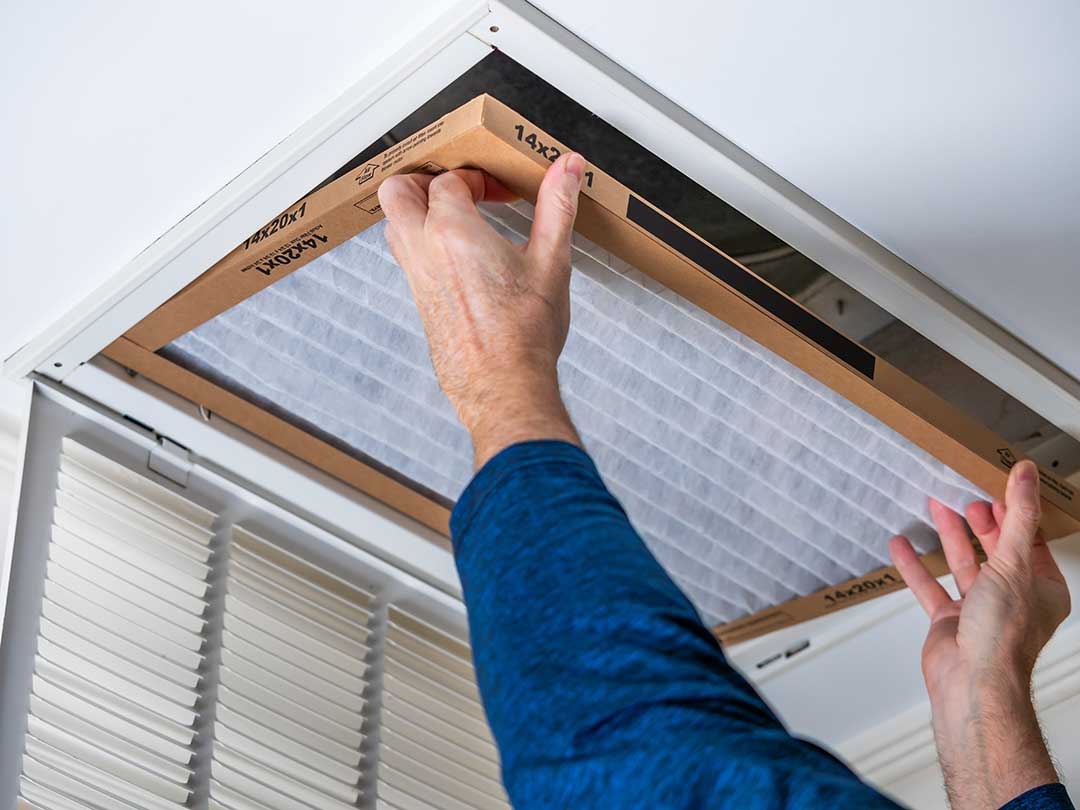
A higher-rated filter is not automatically the right choice for every system. The filter should match the equipment’s design and the home’s needs. If a system has always used a particular size and type, changing to a substantially more restrictive filter deserves caution.
Filters are designed to protect the HVAC equipment first. They are not a complete solution for every indoor air quality concern.
What happens if an HVAC filter is too dirty?
A clogged filter reduces the amount of air moving through the system. In cooling mode, restricted airflow can make it harder for the indoor coil to absorb heat and may contribute to coil icing. The system may also run longer, use more electricity, and provide less even cooling. Severely restricted airflow can damage blower motors and even overheat the compressor in the outdoor unit.
A dirty filter can also allow dust to accumulate in parts of the HVAC system that are harder to clean, including the blower compartment and indoor coil. Replacing the filter does not remove existing buildup, but it helps reduce additional dust entering the equipment.
Can a dirty filter cause allergies?
A dirty filter may hold dust, pet dander, pollen, and other particles, but replacing it does not guarantee that allergy symptoms will disappear. Indoor particles can also come from bedding, flooring, furniture, outdoor air leakage, and ordinary household activity.
A properly installed filter can help capture airborne particles that pass through the return-air system. It works best when the filter fits tightly and the system does not pull air around the edges.
Avoid removing a filter and operating the system without one. Even a basic filter is necessary to help protect the blower and indoor components.
When should a homeowner stop and seek help?
Filter replacement is generally safe when the access point is easy to reach and the equipment appears normal. Stop and seek qualified assistance if there is exposed electrical damage, burning odor, water near electrical components, severe rust, unusual buzzing, refrigerant-line icing, or a filter that cannot be removed without forcing it.
A filter that becomes heavily clogged in a short time may indicate unusual dust entry, construction debris, an improperly sealed return duct, or another system issue. A replacement filter can address the immediate blockage, but it may not explain why the problem keeps returning.
For most households, the practical routine is simple: check the filter monthly, replace it when visibly loaded with dust, install it in the correct airflow direction, and keep a written record of the change. That habit is especially useful during the region’s long, humid cooling season.